
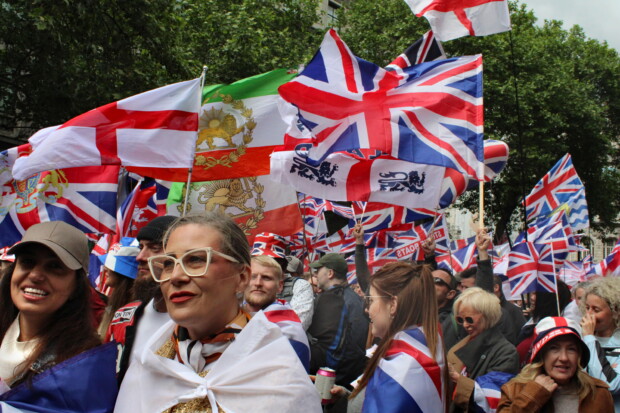
The Scale of the Protest
Tens of thousands of demonstrators converged on central London for the “Unite the Kingdom” rally, an event orchestrated by activist Tommy Robinson. According to The Telegraph, early estimates placed the crowd size at around 50,000 in Kingsway before the procession moved toward Whitehall and Parliament Square. Chants of “We want Starmer out” echoed through the streets, accompanied by a sea of St George’s Crosses and Union Jacks.
Advertisement
The protest serves as a direct challenge to Prime Minister Keir Starmer, with the event’s central slogan calling for the country to be “freed” from his administration.
For Downing Street and much of the political establishment, the classification of the attendees is already settled: they are dismissed en masse as the “far right.” This rhetorical branding highlights how modern British political discourse is categorised—those who voice concerns over mass immigration, public safety, and perceived political double standards are swiftly relegated to the ideological fringes.
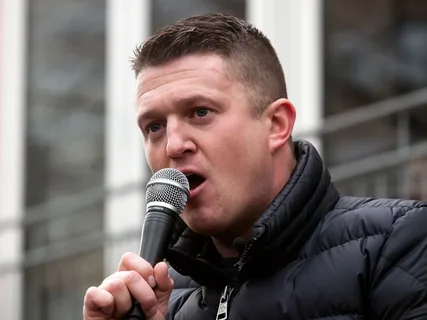
A Capital Under Surveillance
To maintain order, the Metropolitan Police launched a massive operation aimed at keeping the rally strictly separated from a concurrent pro-Palestinian demonstration. According to the BBC, over 4,000 officers were deployed across London to establish a secure buffer zone between the two factions. The operation features:
-
Aerial and Ground Support: Continuous drone surveillance, alongside police horses and canine units.
-
Tactical Readiness: Armoured vehicles held in reserve to prevent potential clashes.
-
Biometric Tracking: Live facial recognition cameras installed at Euston and King’s Cross St Pancras stations—two major transit hubs for arriving demonstrators.
The Met Police described the deployment as one of its most significant operations in recent years, further complicated by the tens of thousands of football fans flooding into Wembley Stadium for the FA Cup final on Saturday afternoon.
Social media footage quickly emerged showing police detaining individuals who appeared to have been flagged by the facial recognition systems. One video captured a scuffle between demonstrators and officers during an arrest. This display of state power was not merely about maintaining a physical presence, but also about showcasing technological capabilities: anyone travelling to the protest faced biometric logging before even leaving the train station.